Sleep Wellness

Postpartum Insomnia Supplements - Melatonin-free Sleep Gains
February 11, 2026|Nawkout Team
Postpartum Insomnia Supplements - Melatonin-free Sleep Gains
  • Melatonin-free sleep options that support natural rhythms can prevent groggy mornings and offer evidence-based..[1].
  • Herbs, GABA‑supporting nutrients and magnesium aid sleep via GABAergic calming and reduced arousal [4][5][6][7][8]
  • Some ingredients (magnesium, theanine, ashwagandha) have RCTs but evidence is limited and inconsistent [3].
  • Read labels: dosages, serving size, timing, and exact active amounts matter; avoid proprietary blends [10]
  • Postpartum people often choose melatonin‑free sleep supplements with calming botanicals and GABA support to avoid...
  • Research suggests (Magnesium Bisglycinate Supplementation in Healthy ) that consult your clinician before using sleep supplements with a newborn; watch for interactions and side effects [11].
  • Evidence for postpartum sleep aids is limited by small, heterogeneous studies; larger RCTs are needed [3][9][7]
Track Sleep Supplement Effectiveness: Monitor Sleep Stages
February 11, 2026|Nawkout Team
Track Sleep Supplement Effectiveness: Monitor Sleep Stages
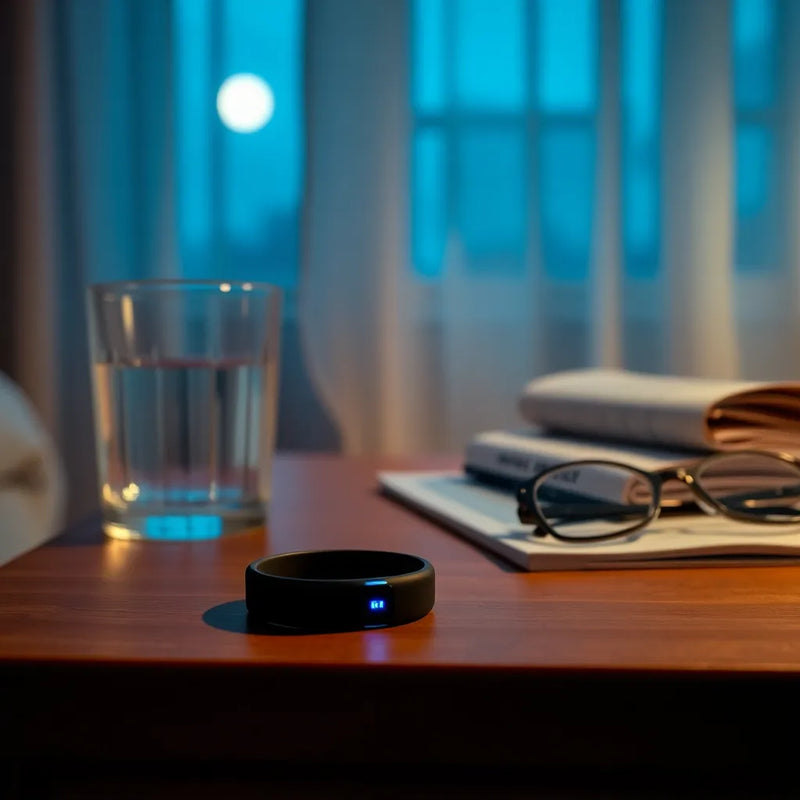
  • Determine if a sleep supplement produces a consistent wearable sleep signal using an evidence-aligned method [1]
  • Sensors and form-factors shape which sleep signals are captured and how algorithms convert them into metrics [1].
  • Pick the outcome you care about and track matching wearable metrics (sleep time, latency, WASO, stages, HR/HRV) [1]
  • Wearables reliably track long-term sleep time and timing but are inaccurate for sleep stages and brief awakenings; evidence suggests (Current Insights into the Risks of Using Melatonin) that high epoch-level concordance is often driven largely by high sensitivity to sleep (and the predominance of sleep epochs in many datasets), whereas specificity for detecting wakefulness is often lower [1].
  • Use replicated nights + simple stats and require consistent multi-metric gains before claiming supplement effects [1].
  • Supplements act via circadian vs anxiety/autonomic pathways, so they shift different wearable signals and timing [6].
  • Wearables estimate time in bed and sleep patterns but miss brief awakenings and sleep stages; some studies indicate (Chronic Administration of Melatonin: Physiological) that reported high epoch-level agreement is driven largely by high sensitivity to sleep (and the predominance of sleep epochs in many datasets), whereas specificity for wake detection is often lower; evidence limited [1][5][4]
  • Run a short, structured wearable test—collect baseline, introduce the supplement, then compare objective plus...
Supplements for Oura & WHOOP Sleep Scores: Boost Deep Sleep
February 11, 2026|Nawkout Team
Supplements for Oura & WHOOP Sleep Scores: Boost Deep Sleep
  • Wearable sleep scores are model-based estimates from sensors and vary by brand, so use them to track major changes [1]
  • Use evidence-backed supplements (e.g., magnesium [2]) and run n-of-1 tests to confirm wearable sleep metric changes.
  • Supplements can change neurotransmission and autonomic tone, causing wearables to detect HR/HRV and sleep shifts [5].
  • Magnesium has the strongest evidence for improving sleep and should be prioritized for wearable testing [2][3]
  • Safety varies by supplement; long‑term safety data are limited, so source carefully and monitor for adverse effects [9].
  • Buy single-ingredient supplements with third-party CoAs, keep formulation consistent, and test one variable at a time.
  • Magnesium appears promising for sleep, but trials are small/short/subjective and long-term data are lacking [2][9].
Melatonin Not Working for Insomnia
February 11, 2026|Nawkout Team
Melatonin Not Working for Insomnia
  • Melatonin primarily shifts circadian timing and its benefits vary by timing, indication, and product...
  • Antihistamines cause quick drowsiness but tolerance and next‑day effects are common [8]; OTCs/supplements have mixed...
  • Try low-cost food and behavioral fixes (e.g., magnesium foods, tart cherry) to boost sleep when melatonin fails [5].
  • Switching from melatonin risks tolerance, rebound and next‑day drowsiness — monitor morning alertness [8][17].
  • Match supplement format to falling vs staying asleep and choose transparently labeled, third‑party tested products [16].
  • Low-quality evidence and product variability make herbal sleep therapies' benefits uncertain; more trials needed [6][3].
  • Pick either methodical testing or a melatonin-free botanical gummy, try one change and log sleep quality [20].
Nawk Retailer Products
February 10, 2026|Nawkout Team
Nawk Retailer Products
  • Gummy safety depends on ingredient, dose, timing and storage; melatonin is used in children/adolescents [1].
  • Prioritize sleep hygiene and routines; use short, clinician‑guided melatonin for circadian shifts or temporary...
  • Melatonin modestly speeds sleep onset but effects vary by dose, timing and formulation [11][12]
  • Start low and individualize timing and dose for sleep gummies; consult labels or clinicians [9][10]
  • Prioritize active ingredient, formulation and third-party testing; check labels for dose, allergens and additives.
  • Modest short‑term benefits of melatonin vary, but heterogeneous trials, variable formulations, and unclear long‑term effects — particularly in pediatric populations — limit conclusions[10].
  • Melatonin gummies modestly help sleep onset short‑term; prioritize sleep hygiene, use briefly, consult clinician [11]
Heart Beating Fast at Night: Calm Racing and Sleep Tips
February 10, 2026|Nawkout Team
Heart Beating Fast at Night: Calm Racing and Sleep Tips
  • Nighttime heart palpitations are common and usually benign but can indicate serious conditions so context matters [2][3]
  • Palpitations are a rapid or irregular heartbeat; clinicians triage by rhythm and risk [1][2][4]
  • Late-day stimulants, stress, and evening habits are common triggers for nighttime palpitations and sleeplessness [5].
  • Stimulants and meds can cause palpitations and rare dangerous rhythms; report recent med/supplement changes [10].
  • Lying down, sleep position and nighttime autonomic shifts make palpitations more noticeable [7].
  • Handled in primary care via history, exam, ECG; ambulatory monitoring if intermittent; urgent care for syncope,...
  • Stimulant/energy‑drink arrhythmia evidence is limited (physio and case reports) [5,6]; diagnostic yields unclear [4].
How Long Does Ashwagandha Stay in Your System
February 10, 2026|Nawkout Team
How Long Does Ashwagandha Stay in Your System
  • Ashwagandha's active withanolides vary by formulation, so how long it stays in you affects safety and timing.
  • Ashwagandha's human clearance is unknown; benefits often appear in 2–4 weeks and common dosing in clinical trials is around 300 mg [1]
    Close-up of three capsules placed along a wooden ruler pointing toward a pocket watch, with blurred calendar pages in the background to suggest time and duration.
    Close-up of three capsules placed along a wooden ruler pointing toward a pocket watch, with blurred calendar pages in the background to suggest time and duration.
    for 8–12 weeks [1].
  • How long ashwagandha stays varies by dose, formulation, duration, absorption, physiology and drug interactions.
  • Routine drug tests don't detect ashwagandha; contamination can cause positives—disclose use and keep product records.
  • may help reduce using ashwagandha and consult your clinician—timelines vary; taper only if needed; avoid unproven detoxes.
Hard Time Falling Asleep at Night: 7 Fixes to Sleep Fast
February 10, 2026|Nawkout Team
Hard Time Falling Asleep at Night: 7 Fixes to Sleep Fast
  • Your circadian clock controls sleep timing and appropriately timed melatonin can shift it, but not cure insomnia [1][3].
  • Cut evening screens/light, cool the room, mask noise, and use the bed only for sleep to reduce conditioned arousal [2].
  • Limit late caffeine and heavy/spicy meals and schedule exercise earlier to improve sleep onset [9][11][2]
  • Use sleep aids as directed and consult a clinician; don't combine CNS depressants—opioids+benzos raise risk [14]
  • CBT-I and behavioral strategies shorten time to fall asleep and may help improve sleep efficiency [19].
How Much Sleep Do Women Need: Optimize Energy & Mood
February 10, 2026|Nawkout Team
How Much Sleep Do Women Need: Optimize Energy & Mood
  • Aim for 7–9 hours/night as a baseline [1]; women may need slightly more—adjust 30–60 min if still sleepy [2].
  • Hormonal changes shift sleep timing and quality; track cycles and use regular light/sleep timing [5][6]
  • Estimates vary; some studies suggest roughly 40–60% of menopausal women may experience sleep problems, and clinicians often consider behavioral therapy & MHT (transdermal formulations may help) [7][8] (Meds, meds, meds: Managing your medications)
  • Insomnia is common in women; sleep-disordered breathing rises with age—screen mood and assess for OSA [12][13][14].
  • Cognitive behavioral therapy for insomnia (CBT‑I) is the primary evidence‑based treatment for chronic insomnia [11].
  • Evidence limited by animal translation [4], heterogeneous HRT trials [7], and CBT‑I implementation gaps [11].
How Long Does It Take to Fall Asleep: Find Sleep Latency
February 09, 2026|Nawkout Team
How Long Does It Take to Fall Asleep: Find Sleep Latency
  • Most healthy adults fall asleep within about 10–20 minutes; much faster/slower may signal sleep debt or problems [2]
  • Sleep onset depends on sleep pressure and circadian timing, with environment and arousal modulating it [6].
  • Rapid sleep onset signals sleep debt/sleepiness [2]; prolonged onset suggests insomnia—seek help [13].
  • Avoid caffeine within six hours of bedtime [8], do a 20–40 min no-screen wind-down and keep regular sleep times [10].
  • OTC/supplements may help short-term but carry safety risks; chronic insomnia needs behavioral treatment [10][20]
  • Behavior-first strategies can reduce sleep latency, but evidence is context-dependent and limited [10].
  • Measure sleep 1–2 weeks, try one change (reduce evening caffeine, brief wind‑down), and seek evaluation if problems...
Sleep Gummies Without Melatonin: Fall Asleep Faster
February 09, 2026|Nawkout Team
Sleep Gummies Without Melatonin: Fall Asleep Faster
  • Melatonin-free sleep gummies use herbs, amino acids, minerals or cannabinoids to support relaxation and sleep [1].
  • Non‑melatonin sleep gummies use L‑theanine/GABA, herbal extracts and minerals; L‑theanine has clinical evidence [5].
  • Non-melatonin ingredients target distinct sleep pathways (GABA, sedatives, adaptogens); combos may improve sleep [2]
  • Melatonin shifts circadian timing and shortens sleep onset; melatonin‑free gummies instead target relaxation [12][2].
  • Match ingredients to your sleep goal, and prioritize per‑serving transparency plus third‑party testing for quality...
  • Evidence for non‑melatonin sleep ingredients is limited and preliminary because trials are small, heterogeneous, or..[5].
Vivid Dreams Meaning: When to Worry and What Helps
February 09, 2026|Nawkout Team
Vivid Dreams Meaning: When to Worry and What Helps
  • Vivid dreams are intensely detailed, emotionally rich dreams you wake remembering as if real [1].
  • REM increases and rebounds after suppression can cause more frequent or vivid dreams and shift their timing [4].
  • Psychiatric drugs often alter dream recall and REM, so dream changes after starting/stopping meds are plausible [5–7].
  • Child melatonin use has risen despite limited evidence; supplements may change dreams vs endogenous [13][14].
  • Vivid dreams with sleepiness or dream-enactment can signal narcolepsy/RBD and may shift with REM-altering meds [15][7].
  • Evidence on dream changes and interventions is mixed, limited, and methodologically varied, so reported effects..[12].